Understanding TradingView and Its Core Features
In the fast-paced world of trading, having the right tools can make all the difference. Traders often seek platforms that not only provide comprehensive data but also enhance their decision-making processes. TradingView stands out as a powerful solution for those engaged in stocks, forex, and cryptocurrencies. This article delves into the essential features of TradingView that cater to both novice and experienced traders, helping them streamline their workflows and refine their strategies.
What is TradingView?
TradingView is a social network for traders and investors that offers advanced charting tools and social networking capabilities. Founded in 2011, the platform has evolved to support users from various financial sectors, including equities, forex, cryptocurrencies, and derivatives. TradingView's unique selling proposition lies in its blend of charting software combined with a community-driven approach, allowing users to share ideas and strategies seamlessly.
Key Features That Make TradingView Stand Out
- Comprehensive Charting Tools: TradingView provides a range of chart types, including candlestick, line, and bar charts, allowing users to analyze price movements effectively.
- Customizable Alerts: The platform's alert system is highly customizable, enabling traders to set notifications based on specific price movements or indicators, ensuring they never miss a critical market change.
- Pine Script: TradingView's proprietary scripting language allows users to create custom indicators and strategies, adding an additional layer of personalization and functionality.
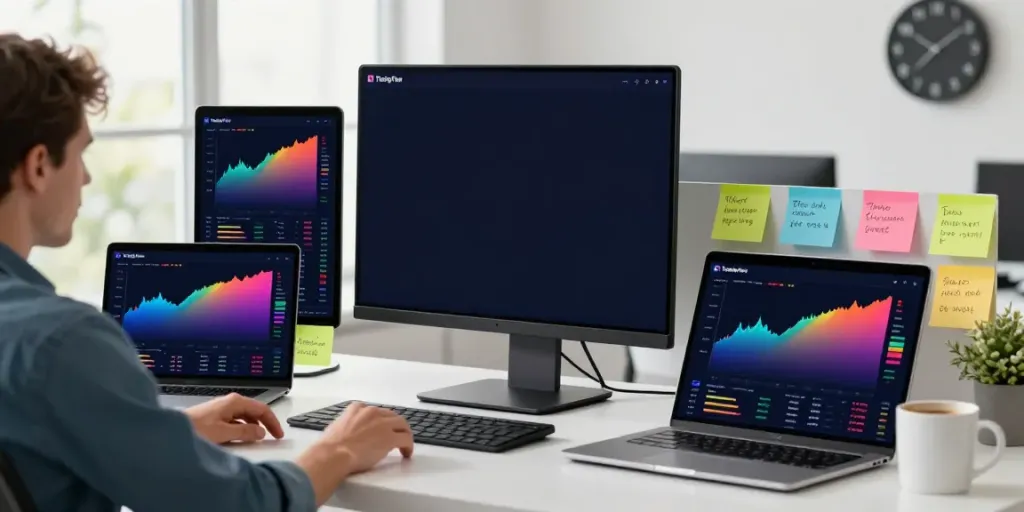
- Multi-Device Accessibility: With apps available for desktop, mobile, and web, TradingView ensures that traders can monitor their investments and execute their strategies on any device, at any time.
- Community Insights: The platform fosters a community of traders who share ideas, insights, and analysis, making it easier for users to learn and improve their trading strategies.
The Platform's User Experience
The user experience on TradingView is designed to be intuitive and user-friendly. New users can easily navigate through the interface, while experienced traders can leverage advanced features without feeling overwhelmed. The platform allows users to customize their dashboards and charts, creating a trading environment that suits their individual preferences. Integrated with social tools, users can also follow other traders, view their analyses, and discuss strategies in real-time, enhancing the overall experience.
Optimizing Your Trading Strategy with TradingView
With a solid understanding of TradingView’s features, the next step is to optimize your trading strategy using this powerful platform. Here’s how you can leverage its various functionalities to enhance your trading performance.
Setting Up Alerts and Notifications
Setting up alerts is a fundamental aspect of using TradingView effectively. By customizing alerts based on price levels, technical indicators, or even fundamental events, traders can stay informed without constantly monitoring the charts. This feature is particularly useful for day traders who need to capitalize on rapid market movements. Notifications can be sent directly to your mobile device or via email, ensuring that you are always in touch with market changes.
Using Pine Script for Custom Indicators
Pine Script is a powerful tool for traders looking to create personalized trading indicators and strategies. With this scripting language, users can define custom indicators or automate their trading strategies. For instance, a trader might set up a script to display buy/sell signals based on a combination of moving averages and RSI levels. By backtesting these strategies in the integrated Strategy Tester, users can refine their approach before deploying it in live trading scenarios.
Backtesting Strategies in the Strategy Tester
Backtesting is a critical practice for any trader looking to validate their strategies before risking real capital. TradingView’s built-in Strategy Tester allows users to evaluate how a trading strategy would have performed historically based on past market data. This tool not only helps in assessing strategy robustness but also in identifying areas for improvement. Users can analyze metrics such as profit factor, maximum drawdown, and win rate to make informed decisions about their trading methods.
Comparative Analysis: TradingView vs Competitors
To understand the true value of TradingView, it is important to compare it with other trading platforms in the market. This section explores how TradingView stacks up against some of its principal competitors, such as MetaTrader.
TradingView vs MetaTrader: A Feature Comparison
While both TradingView and MetaTrader are popular among traders, their approaches differ significantly. TradingView excels in advanced charting and community features, providing a social trading experience where users can share insights and strategies. In contrast, MetaTrader is known for its automated trading capabilities and robust algorithmic trading features. Traders looking for a community-driven platform with superior charting capabilities may find TradingView more appealing, while those focused on automation may prefer MetaTrader.
User Reviews and Feedback from Fellow Traders
Feedback from users often highlights TradingView’s user-friendly interface and extensive feature set. Users frequently commend its charting tools and the ability to customize alerts and indicators. However, some traders note that while TradingView offers many features, certain advanced functionalities seen in platforms like MetaTrader, such as deeper algorithmic capabilities, may not be present. Overall, TradingView’s range of features makes it a strong contender in the trading software arena.
Key Advantages of Using TradingView Over Other Platforms
- Integrated Community: The interactive nature of TradingView’s community provides invaluable insights and learning opportunities for traders.
- Device Flexibility: The capability to trade from any device without losing functionality sets TradingView apart from its competitors.
- Frequent Updates: TradingView consistently rolls out updates that enhance the user experience, which is vital in a rapidly changing market environment.
Maximizing the Trading Experience on Multiple Devices
Today’s traders often switch between devices, making it essential for trading platforms to offer a seamless experience across all interfaces. Here’s how TradingView meets those demands.
Using TradingView on Mobile: Pros and Cons
TradingView's mobile app is a powerful tool for traders on the go. It allows users to access real-time market data, manage their alerts, and execute trades from their smartphones. While the app provides most of the key features available on the desktop version, some users may find the touch interface less efficient for detailed analysis. However, the trade-off is the convenience of having trading functionalities readily available at any time.
Desktop vs. Web Versions: Which is Better?
The desktop version of TradingView offers enhanced performance and may cater better to users engaged in extensive analysis due to its more powerful capabilities and larger display options. Conversely, the web version provides flexibility, allowing traders to access their accounts from anywhere without needing to download software. Those who frequently switch between devices might prefer the convenience of the web app, while dedicated traders performing in-depth analysis might gravitate towards the desktop application.
Synchronization Across Devices: How It Works
One of TradingView’s standout features is its ability to synchronize user settings and data across multiple devices. This means that any alerts set, charts modified, or trades executed on one device will be reflected on all other devices. This level of synchronization ensures that traders maintain continuity in their trading workflows, regardless of the device they are using at any given moment.
Future Trends and Predictions for TradingView in 2026
As we look towards the future, it is important to consider how TradingView may evolve in response to industry trends and the needs of its users. Here’s what we might expect to see in the coming years.
Innovations to Expect from TradingView
Looking ahead, TradingView is likely to continue enhancing its platform with new features that harness advancements in trading technology. This may include improved predictive analytics tools, enhanced algorithmic trading capabilities, and more extensive integration with financial news sources to provide real-time updates directly on the platform. The goal will be to provide traders with even more information and tools to make informed decisions.
The Impact of AI on Trading Platforms
The rise of artificial intelligence is poised to transform trading as we know it. Future updates to TradingView may incorporate AI-driven features that analyze trading patterns, suggest optimal trading strategies, or even automate trading decisions based on predetermined parameters. As the financial landscape becomes more data-driven, adapting AI solutions will be crucial for platforms like TradingView to remain competitive.
How TradingView Plans to Evolve with Market Changes
As market dynamics shift, TradingView is committed to evolving alongside them. This may involve expanding its asset class coverage, enhancing social trading functionalities, and improving collaboration tools for traders. By continually adapting to the changing needs of traders, TradingView aims to solidify its position as a leading platform in the financial trading space.